
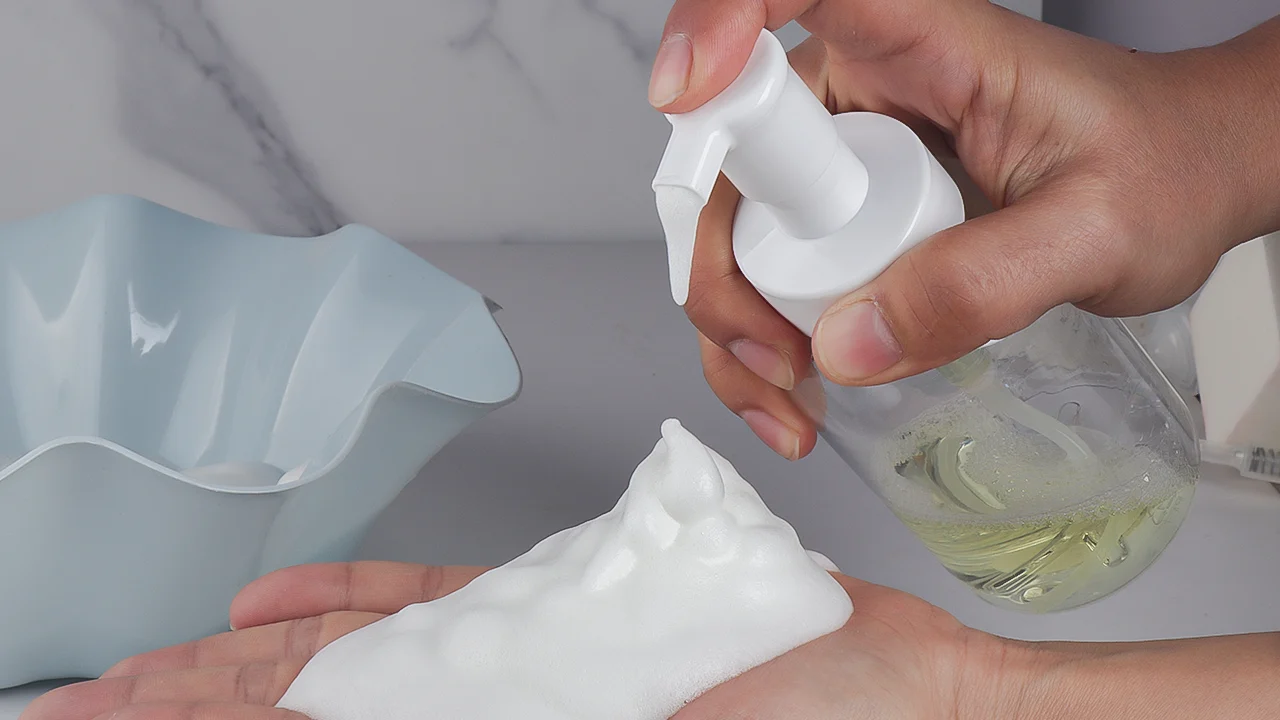
Cosmetic foam pumps are widely used in facial cleansers, hand soaps, and personal care products, but packaging defects such as leakage, unstable foam output, actuator failure, and spring corrosion can lead to customer complaints and product returns. To ensure stable performance, cosmetic brands, OEM/ODM factories, and packaging buyers should conduct leakage testing, actuator force testing, compatibility testing, foam stability evaluation, and life cycle testing before mass production and bulk order acceptance.
What Are the Main Quality Problems in Cosmetic Foam Pumps?
The most common cosmetic foam pump quality issues include:
- Leakage around the closure or neck finish
- Poor foam density or unstable foam output
- High actuator pressing force
- Spring corrosion
- Pump rebound failure
- Dosage inconsistency
- Air intake instability
- Material compatibility problems
These defects can affect user experience, transportation safety, and long-term packaging reliability.
How Are Cosmetic Foam Pumps Tested?
Professional foam pump quality control usually includes:
| Test Type | Purpose |
| Leakage Test | Check sealing performance during storage and transportation |
| Actuator Force Test | Evaluate pressing smoothness and user comfort |
| Compatibility Test | Verify formula compatibility with packaging materials |
| Foam Stability Test | Measure foam density, texture, and retention time |
| Life Cycle Test | Evaluate long-term pump durability and consistency |
Most cosmetic foam pump manufacturers perform these tests before shipment approval.
What Should Buyers Inspect Before Approving Bulk Orders?
Before mass production approval, buyers should inspect:
- Visual appearance
- Neck finish dimensions
- Foaming performance
- Leakage resistance
- Pump smoothness
- Spring durability
- Transportation stability
- Formula compatibility
Incoming quality inspection for bulk orders should also include AQL sampling, torque testing, and random functional testing.
How to Choose a Reliable Cosmetic Foam Pump Manufacturer in China
When sourcing cosmetic packaging from China, buyers should evaluate:
- Factory quality control systems
- Mold precision capability
- Testing laboratory equipment
- Export experience
- Production consistency
- Material traceability
- Technical communication efficiency
Reliable suppliers should provide leakage test reports, compatibility testing data, and life cycle testing records.
Frequently Asked Questions
What causes foam pump leakage?
Foam pump leakage is usually caused by poor sealing performance, incorrect neck finish dimensions, gasket defects, or transportation pressure changes.
How long should a foam pump life cycle test last?
Most cosmetic foam pumps are tested for 3,000 to 10,000 dispensing cycles depending on product positioning and quality requirements.
Why is compatibility testing important for foam pumps?
Certain cosmetic formulas containing alcohol, surfactants, or essential oils may damage plastic materials or corrode internal springs over time.
What is foam stability testing?
Foam stability testing evaluates foam density, bubble consistency, and foam retention time to ensure stable user experience.
Why do cosmetic brands audit foam pump suppliers?
Supplier audits help brands evaluate manufacturing capability, quality systems, testing standards, and mass production consistency before long-term cooperation.