
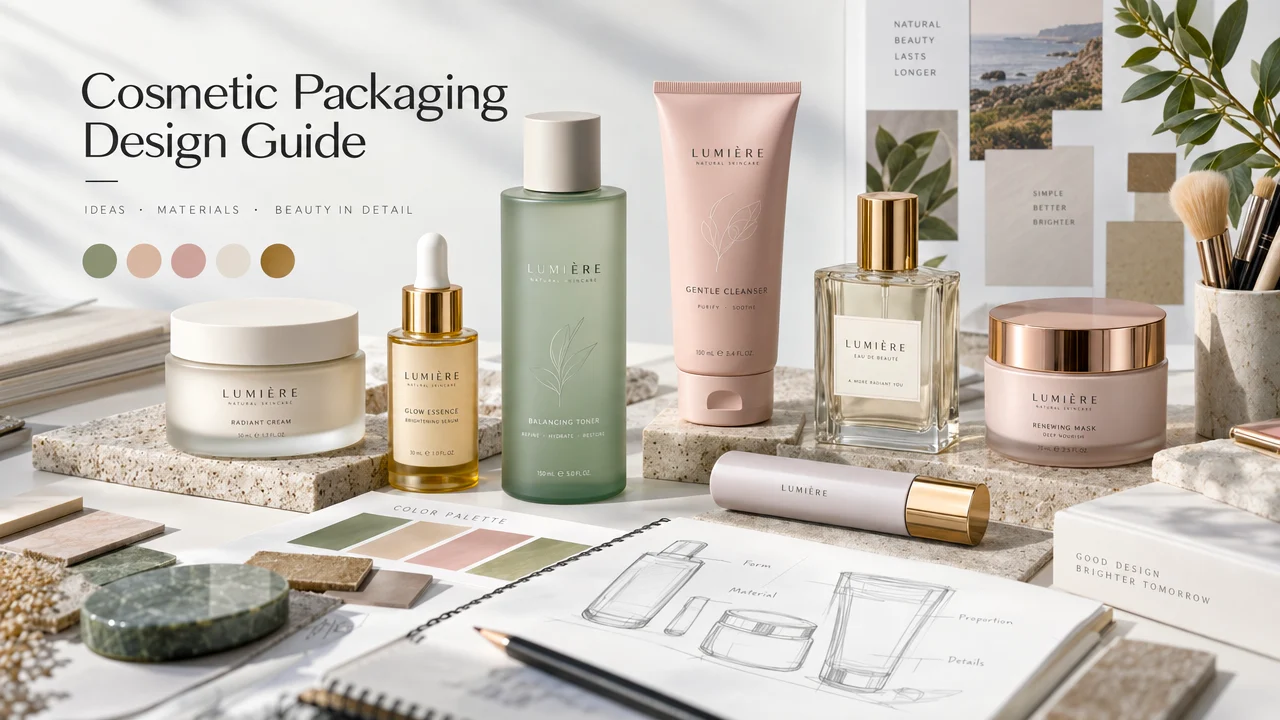
Cosmetic packaging is often the first physical interaction customers have with a beauty brand. A beautiful bottle can attract attention, but poor usability or weak product protection can damage the experience. A successful packaging design balances brand identity, functionality, manufacturing, and customer expectations from the start.
Good cosmetic packaging design combines visual identity, functionality, product protection, usability, and manufacturing feasibility. Brands should consider the bottle or container shape, materials, colors, typography, dispensing system, decoration, sustainability, target audience, and production requirements. The best design is not simply attractive; it communicates the brand clearly, protects the formula, provides a convenient user experience, and can be produced consistently at the required scale.
Great packaging starts with a clear strategy. Let’s look at the key design decisions that can turn a cosmetic container into a recognizable brand asset.
What Makes Good Cosmetic Packaging Design?
Good cosmetic packaging design is about more than making a bottle look attractive.
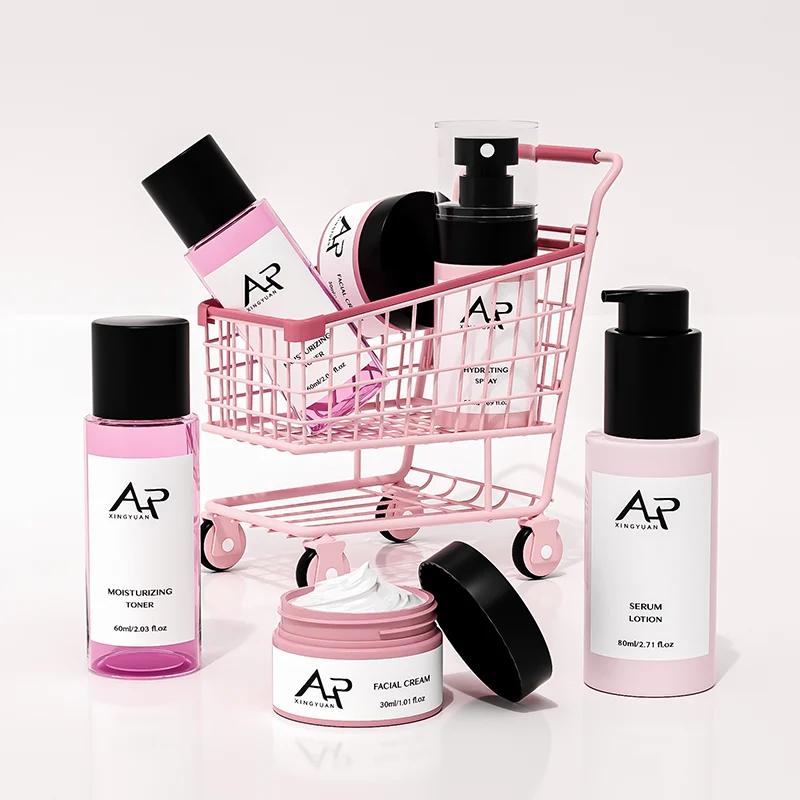
When I work through a packaging concept, I think about several questions at the same time:
- Does the packaging reflect the brand?
- Is it appropriate for the target customer?
- Does it protect the formula?
- Is it easy to use?
- Does it communicate the product clearly?
- Can it be manufactured consistently?
- Does it fit the brand’s sustainability goals?
- Can it work within the target cost?
The strongest packaging designs balance all of these factors.
Brand Identity
Packaging should look like it belongs to your brand.
A premium skincare brand, a natural beauty company, and a clinical skincare line may all sell similar products, but their packaging should communicate very different identities.
Functionality
The bottle needs to work.
The pump should dispense correctly. The cap should close securely. The container should be comfortable to hold and easy to use.
Product Protection
Packaging needs to protect the formula from potential external factors and help maintain the intended product quality throughout its shelf life.
User Experience
Consumers interact with packaging every day.
Opening, dispensing, holding, closing, and storing the product all become part of the customer experience.
Manufacturing Feasibility
A design can look excellent on a computer screen but still be difficult or expensive to manufacture.
This is why I recommend involving a packaging manufacturer before the design becomes completely fixed.
How Do You Design Packaging for a Cosmetic Product?
A successful cosmetic packaging project usually starts with the product rather than the bottle.
Here is a practical process I recommend.
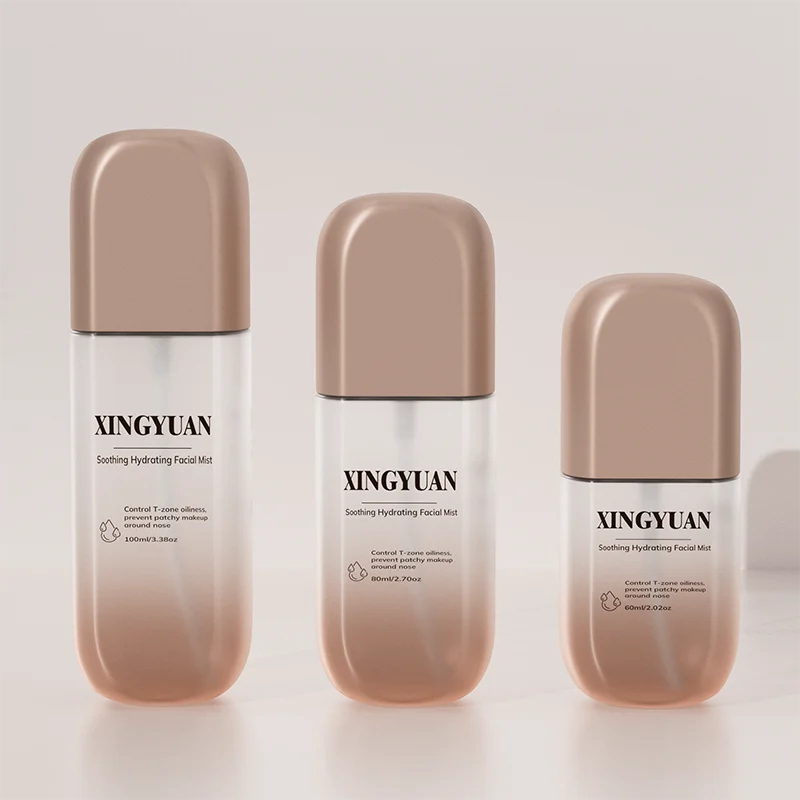
Step 1: Define the Brand
Before choosing a bottle, define your brand positioning.
Consider:
- Target audience
- Price range
- Brand personality
- Product positioning
- Main competitors
- Target market
For example, a premium anti-aging serum may need a very different packaging direction from an affordable daily moisturizer.
Your packaging should support the position you want the product to occupy.
Step 2: Understand the Product
Next, look at the formula.
Ask:
- What is the formula viscosity?
- Is it oil-based or water-based?
- Is it sensitive to light?
- Does it contain alcohol or essential oils?
- How much product should be dispensed per use?
- Does it require an airless system?
The answers can influence the packaging format and dispensing system.
This is also why formula compatibility should be evaluated before finalizing a package.
Step 3: Choose the Packaging Format
Different products may require different packaging formats.
Common cosmetic packaging options include:
- Lotion bottles
- Serum bottles
- Airless bottles
- Cream jars
- Tubes
- Dropper bottles
- Glass bottles
For example, an airless bottle may be appropriate when controlled dispensing and product protection are priorities.
A cream may work better in a jar.
A lightweight lotion may be suitable for a pump bottle.
There is no single packaging format that works for every product.
Step 4: Develop the Shape
Once the format is clear, you can begin working on the physical shape.
Consider:
- Silhouette
- Proportions
- Grip
- Stability
- Shelf presence
- Filling requirements
- Manufacturing feasibility
A distinctive shape can make a product easier to recognize.
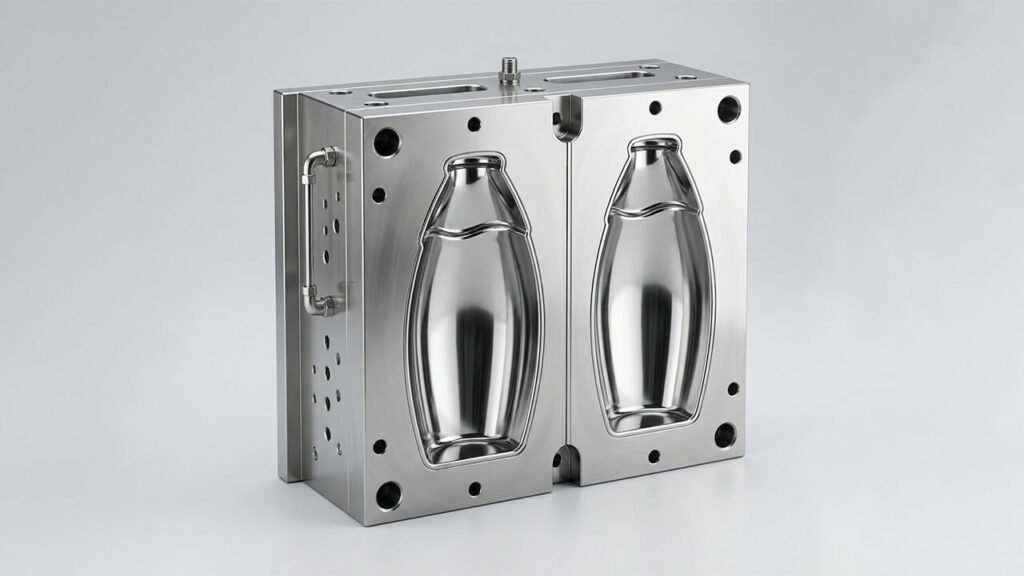
But there is an important difference between distinctive and unnecessarily complicated.
A highly complex bottle may require more expensive tooling and create additional production challenges.
Step 5: Build the Visual Identity
Now you can develop the visual language.
Important elements include:
- Logo
- Colors
- Typography
- Graphics
- Product name
- Label hierarchy
- Decorative details
The goal is not to put every possible design element onto the bottle.
Instead, create a clear visual hierarchy.
Customers should quickly understand:
Who made it → What it is → Why it matters
Step 6: Select Materials and Decoration
Material selection is another important design decision.
Depending on the product and positioning, you might consider:
- PET
- PP
- PE
- PCR plastic
- Glass
- Aluminum
- Paper or fiber-based components
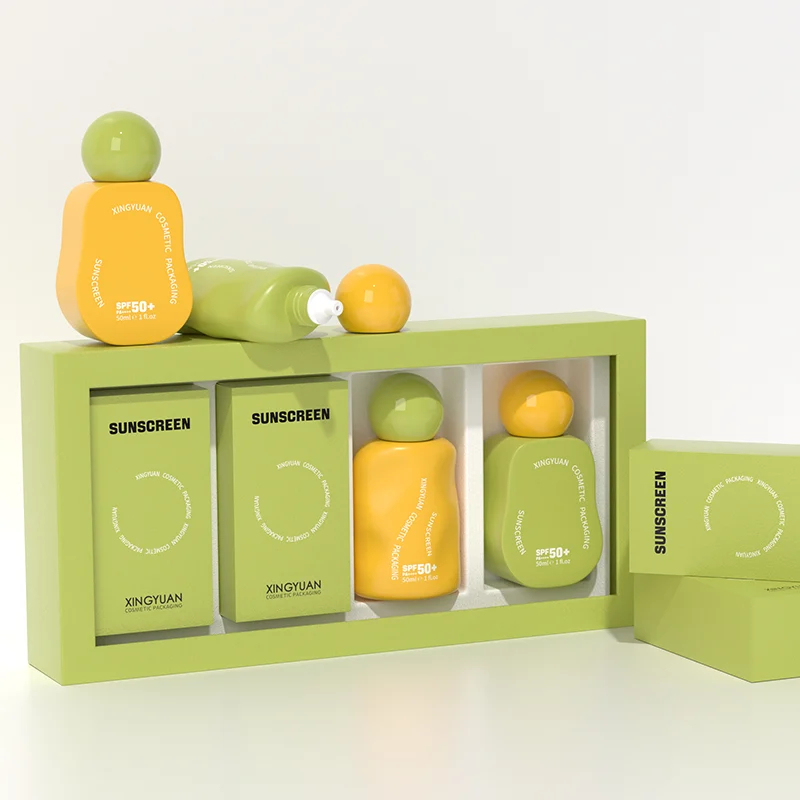
For plastic cosmetic packaging, surface treatment can significantly change the final appearance.
Options include:
- Spray coating
- Electroplating
- Silk printing
- Hot stamping
For example, the same bottle shape can look completely different when produced with a soft-touch coating versus a glossy metallic finish.
Step 7: Prototype and Test
Before moving into mass production, create samples.
Evaluate:
- Appearance
- Color
- Decoration
- Pump performance
- Closure
- Formula compatibility
- Leakage
- Durability
- User experience
Don’t judge a package only by how it looks.
Pick it up.
Open it.
Use the pump.
Turn the cap.
Fill it with the actual formula.
Then ask whether the package still works as intended.
What Are the Principles of Cosmetic Packaging Design?
I usually recommend seven basic principles.
1. Keep the Brand Visible
Your packaging should communicate your brand identity without requiring customers to study it.
2. Make the Product Easy to Understand
The product name and key information should be easy to find.
3. Design for the User
Consider how consumers will hold, open, dispense, and store the product.
4. Protect the Formula
The package needs to be appropriate for the actual product inside.
5. Create Visual Differentiation
Your packaging should be recognizable among competing products.
6. Consider Sustainability
Material use, recycled content, recyclability, and packaging weight can all be considered during the design process.
7. Design for Manufacturing
The final design needs to be realistic for tooling, production, assembly, decoration, and quality control.
These principles are interconnected.
A design that succeeds visually but fails during manufacturing is not a successful commercial packaging design.
How Should You Choose a Cosmetic Packaging Shape?
The shape of a cosmetic bottle can have a significant effect on brand perception.
Cylindrical Bottles
Cylindrical bottles are versatile and commonly used for skincare.
They can work well for:
- Lotion
- Toner
- Serum
- Body care
Their relatively straightforward geometry can also support efficient manufacturing.
Square or Rectangular Bottles
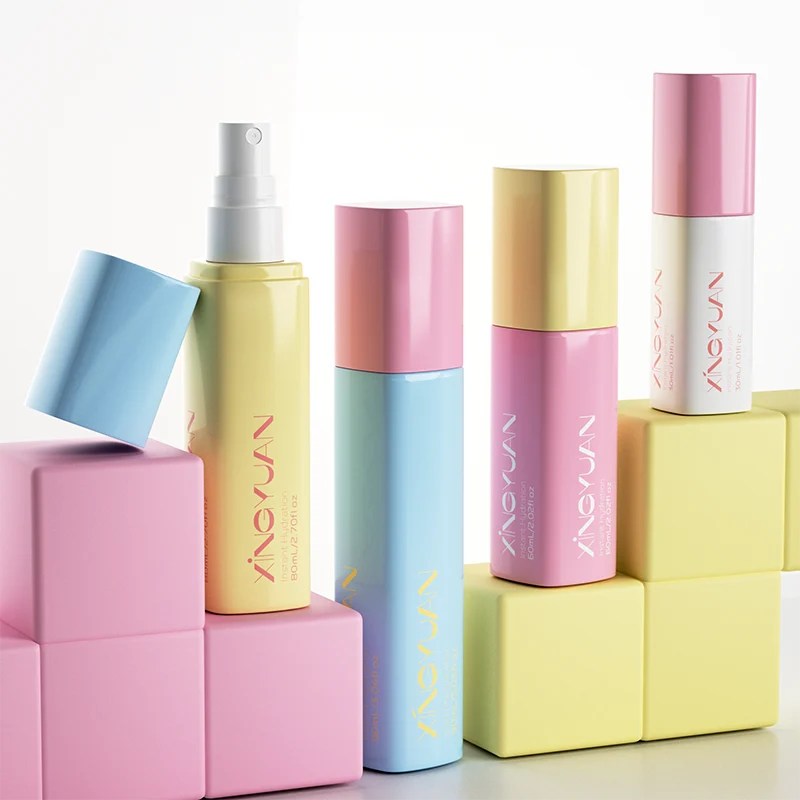
These shapes can create a more structured and modern appearance.
They may provide stronger shelf differentiation, although the design needs to account for handling, corners, stability, and manufacturing requirements.
Slim Bottles
Slim formats are often suitable for products such as:
- Serums
- Facial oils
- Premium skincare
They can create an elegant appearance while making the product easy to hold.
Wide Jars
Wide jars are commonly associated with:
- Face creams
- Body creams
- Masks
They can provide a substantial, premium appearance and a wide opening for accessing thicker products.
Custom Shapes
Custom shapes can be useful when a brand wants stronger visual differentiation.
However, custom does not automatically mean better.
Before developing a custom mold, consider:
- Tooling cost
- MOQ
- Production complexity
- Filling
- Assembly
- Shipping
- Stability
- Long-term production volume
The best custom design is one that looks distinctive and remains practical to manufacture.
How Do Colors Affect Cosmetic Packaging Design?
Color is one of the fastest ways to communicate a brand’s visual identity.
Common cosmetic packaging colors include:
- White
- Black
- Green
- Blue
- Pink
- Beige
- Brown
- Metallic tones
However, I would avoid treating color meanings as universal rules.
For example, green is often associated with natural products, but a green package does not automatically communicate sustainability.
Similarly, black can work for luxury packaging, but luxury does not depend on black alone.
The final impression depends on the combination of:
Color + Shape + Typography + Material + Finish + Brand
The same color can communicate very different things depending on the overall design.
How Important Is Typography in Cosmetic Packaging?
Typography is easy to underestimate.
A beautiful package can still look weak if the text is difficult to read.
Good cosmetic packaging typography should balance:
- Brand recognition
- Readability
- Hierarchy
- Product information
- Available surface area
Think about a small serum bottle.
There may only be a limited amount of space for:
- Brand name
- Product name
- Product benefit
- Volume
- Required information
Trying to fit too much information onto the front of the package can make the design feel crowded.
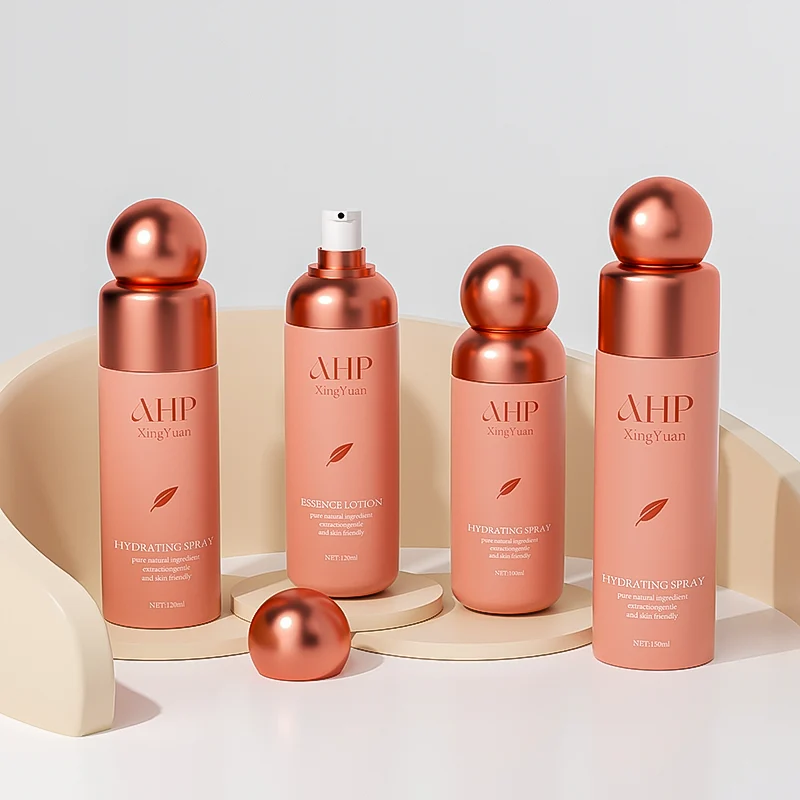
A better approach is to establish a clear hierarchy.
For example:
Brand
Product Name
Key Benefit
Volume
Then place additional information where appropriate.
How Can Cosmetic Packaging Stand Out on Shelves and Online?
Today, packaging needs to work in more than one environment.
A traditional retail product needs shelf impact.
An e-commerce product needs strong visual recognition in product photos and thumbnails.
A DTC beauty product may also appear on:
- TikTok
- Brand websites
- Influencer content
This creates a new design challenge.
Your package should be recognizable when:
- It is sitting on a shelf.
- It is photographed from the front.
- It appears in a small thumbnail.
- A customer holds it in a video.
- It appears in an unboxing.
Shelf Impact
Shape, color, contrast, and scale can help a product stand out.
E-Commerce Visibility
The package needs to remain recognizable even when the product image is relatively small.
Social Media
Distinctive packaging can become part of the visual content itself.
Unboxing Experience
Opening the product can reinforce the brand positioning and create another customer touchpoint.
For modern beauty brands, packaging is increasingly both a physical product component and a marketing asset.
How Can You Make Cosmetic Packaging Look More Luxurious?
Luxury does not necessarily require an expensive or complicated bottle.
Perceived value can come from several design elements.
Metallic Effects
Metallic finishes can create a premium visual impression.
Hot Stamping
Hot stamping can be used for logos, lettering, and decorative elements.
Electroplating
Electroplated components can provide a distinctive metallic appearance.
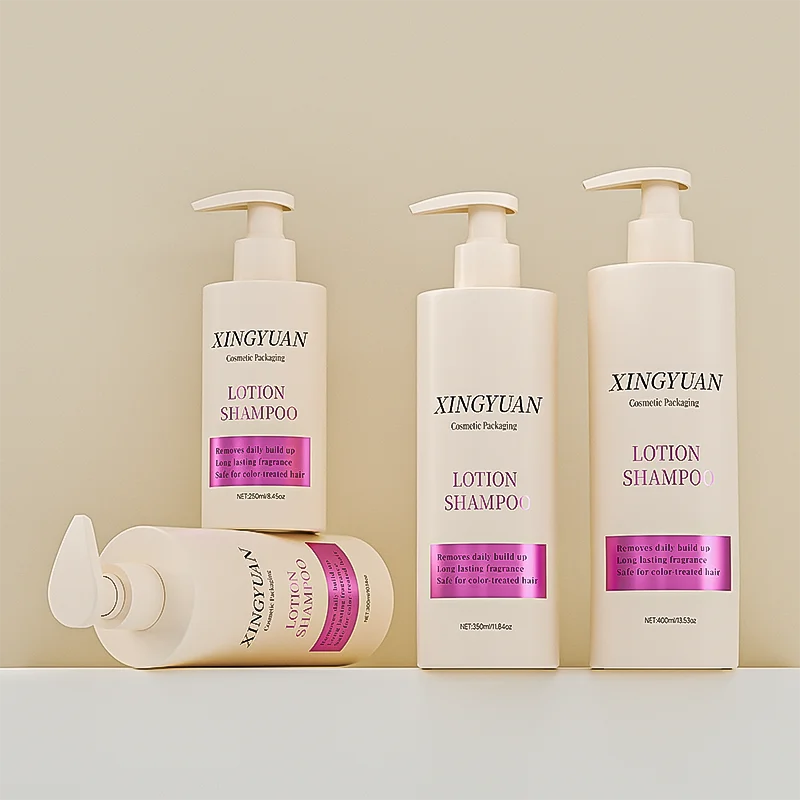
Premium Coatings
Surface coatings can change the color, texture, and tactile experience.
Custom Shapes
A distinctive bottle silhouette can create stronger brand recognition.
Tactile Experience
The way a package feels in the hand can influence perceived quality.
However, luxury packaging still needs to function properly.
A premium-looking package that leaks or has a poor dispensing system will quickly damage the perceived value.
For more ideas, see our Luxury Cosmetic Packaging Ideas.
How Does Sustainability Affect Cosmetic Packaging Design?
Sustainability should be considered during the design stage, rather than added after the packaging has already been finalized.
Depending on the product and target market, brands may consider:
- Lightweight structures
- Material reduction
- PCR content
- Recyclable materials
- Fewer components
- Refillable systems
- Efficient transportation
For example, reducing unnecessary material can potentially reduce both packaging weight and transportation requirements.
But sustainability needs to be balanced with product protection.
A package that uses less material but fails to protect the product is not necessarily a better commercial solution.
For more information, see our Eco-Friendly Cosmetic Packaging Guide and Sustainable Cosmetic Packaging Materials.
How Can Brands Design Packaging for Manufacturing?
This is where creative packaging design needs to meet engineering.
A designer may ask:
“Does this look good?”
A packaging manufacturer also needs to ask:
“Can we produce this consistently?”
Important manufacturing considerations include:
- Mold complexity
- Wall thickness
- Material selection
- Tolerances
- Assembly
- Decoration
- Production volume
- MOQ
- Quality control
For example, an unusual bottle shape may look impressive but require a much more complicated mold.
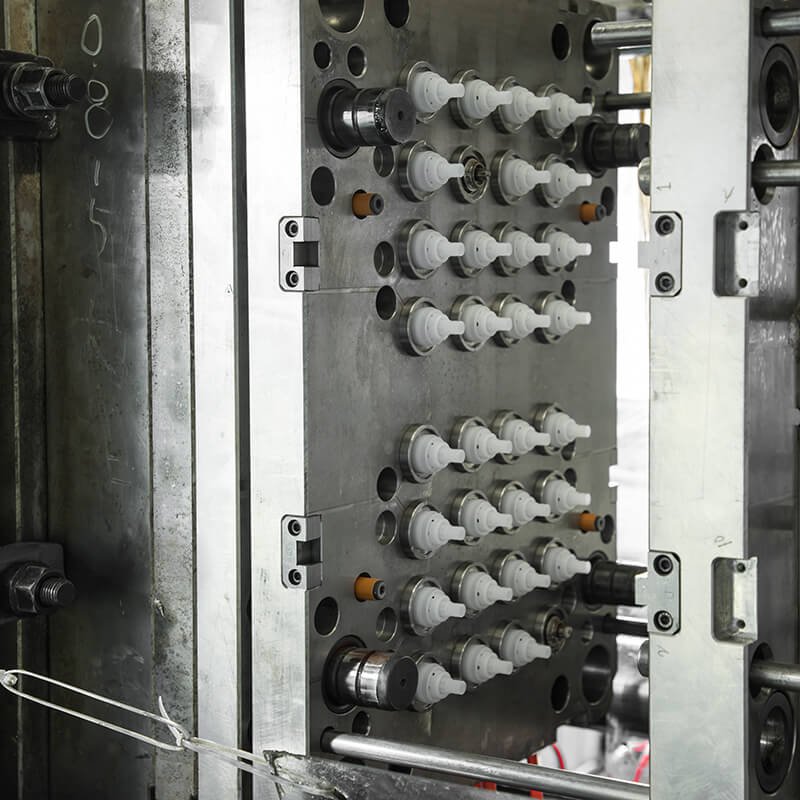
A design with many separate components may also increase assembly costs.
This does not mean brands should avoid creative packaging.
It means creativity should be developed alongside manufacturing knowledge.
What Are the Most Common Cosmetic Packaging Design Mistakes?
Even experienced brands can make packaging design mistakes.
Common examples include:
- Using too much decoration
- Making important information difficult to read
- Choosing a package that does not suit the formula
- Using a dispensing system that does not work well
- Creating unnecessarily complicated shapes
- Ignoring manufacturing requirements
- Forgetting about transportation
- Choosing aesthetics over product protection
One of the most effective ways to reduce these risks is to test the packaging before mass production.
You can read more in our 10 Common Cosmetic Packaging Mistakes Brands Should Avoid.
How Can a Cosmetic Packaging Manufacturer Help With Design?
A packaging manufacturer can provide much more value when involved early in the development process.
The development process may look like:
Concept → Structure → Material → Mold → Prototype → Testing → Production
During these stages, an experienced manufacturer can help with:
Manufacturing Feasibility
Can the proposed structure be produced reliably?
Material Selection
Which material is appropriate for the product and desired appearance?
Mold Development
Can the design be translated into an efficient production mold?
Sample Development
Does the physical package match the original concept?
Decoration
Which surface treatment provides the desired appearance and durability?
Cost Optimization
Can the design be simplified without losing its visual identity?
This early collaboration can prevent expensive changes later.
Cosmetic Packaging Design Services From Comaypack
At Comaypack, we support beauty brands that need customized cosmetic packaging rather than simply choosing an existing bottle from a catalog.
Our capabilities cover the process from packaging development to production.
OEM and ODM Development
We support:
- Custom cosmetic bottles
- Custom cream jars
- Structural development
- OEM packaging
- ODM packaging
- Sample development
This allows brands to start from an existing concept or develop a more customized packaging solution.
Mold Development
For brands that want a distinctive bottle or container, mold development is an important part of the process.
We can support the transition from:
Design Concept → Mold → Sample → Mass Production
Plastic Cosmetic Packaging
Our core product range includes:
- Lotion bottles
- Serum bottles
- Airless bottles
- Cream jars
- Custom plastic cosmetic bottles
The right format depends on the formula, dispensing requirements, brand positioning, and target market.
Surface Treatment
We provide several decoration and surface treatment options, including:
- Spray coating
- Electroplating
- Silk printing
- Hot stamping
These techniques can help translate a brand’s visual identity onto the physical package.
Production and Delivery
Beyond design and development, we support:
- Sampling
- Mass production
- Quality control
- Production coordination
- Fast delivery
Our experience with international customers also supports brands selling into markets such as the USA, Europe, and Australia.
Cosmetic Packaging Design Checklist
Before approving a cosmetic packaging design, I recommend checking the following.
Brand
- Does the packaging reflect the brand identity?
- Is the target customer clear?
- Does the design match the product’s price positioning?
Product
- Is the package compatible with the formula?
- Is the dispensing system appropriate?
- Does the package protect the product?
Design
- Is the shape distinctive?
- Is the information easy to read?
- Does the color fit the brand?
- Does the package look good in product photography?
Manufacturing
- Can the package be molded efficiently?
- Is the design realistic for mass production?
- Is the MOQ appropriate?
- Can quality remain consistent?
Sustainability
- Can material use be reduced?
- Is PCR content appropriate?
- Is the package recyclable in the target market?
- Can unnecessary components be removed?
Market
- Does the packaging suit the target customer?
- Is it suitable for retail?
- Is it suitable for e-commerce?
- Can it withstand international shipping?
If the answer to all of these questions is positive, you are much closer to a production-ready packaging concept.
Cosmetic Packaging Design FAQs
What makes good cosmetic packaging design?
Good cosmetic packaging design combines brand identity, functionality, product protection, usability, visual differentiation, sustainability, and manufacturing feasibility. The package should look attractive while also working reliably with the formula and intended dispensing system.
How do I design packaging for a cosmetic product?
Start by defining the brand and target customer. Then understand the formula, choose an appropriate packaging format, develop the shape and visual identity, select materials and decoration, and finally create samples for functional and compatibility testing before mass production.
What are the principles of cosmetic packaging design?
The main principles are clear brand communication, functionality, product protection, user experience, visual differentiation, sustainability, and manufacturing feasibility. Successful packaging balances creative design with practical production requirements.
How can packaging design make a beauty brand stand out?
Distinctive shapes, consistent colors, strong typography, appropriate materials, premium finishes, and a clear visual identity can help a beauty brand stand out. Packaging should also be recognizable in e-commerce images and social media content.
What colors work best for cosmetic packaging?
There is no universally best color. The right choice depends on brand identity, target audience, product positioning, and market expectations. The overall combination of color, shape, typography, material, and finish is more important than any single color.
How important is packaging design for cosmetics?
Packaging design is highly important because it affects brand perception, product differentiation, usability, and the customer experience. For many beauty products, packaging is one of the first physical brand touchpoints customers encounter.
How much does custom cosmetic packaging design cost?
Custom packaging costs vary according to the packaging structure, material, size, mold requirements, order quantity, MOQ, decoration, and production specifications. A manufacturer can provide a more accurate quotation after reviewing the project requirements.
Conclusion
Effective cosmetic packaging design combines brand identity, functionality, product protection, usability, sustainability, and manufacturing feasibility. From bottle shape and color to materials and decoration, every decision should support the product and target customer. Working with an experienced packaging manufacturer can help turn creative concepts into practical, scalable packaging.
The best cosmetic packaging is not simply the package that looks the most impressive.
It is the one that tells the right brand story, protects the product, feels good to use, performs reliably, and can be manufactured consistently.
For beauty brands developing a new skincare or cosmetic product, involving the packaging manufacturer early can make the development process more efficient and reduce unnecessary changes before mass production.
At Comaypack, we support cosmetic brands with OEM/ODM development, mold development, custom plastic cosmetic packaging, surface treatment, production, and international delivery.
If you already have a packaging concept, product formula, reference bottle, or initial design, our team can help evaluate the next step toward a production-ready solution.