
Introduction
Choosing sustainable cosmetic packaging can be confusing because brands have many materials and designs to consider. A package may look eco-friendly but still create challenges in recycling, production, transportation, or product protection. Understanding the full packaging lifecycle helps brands make more responsible and practical choices.
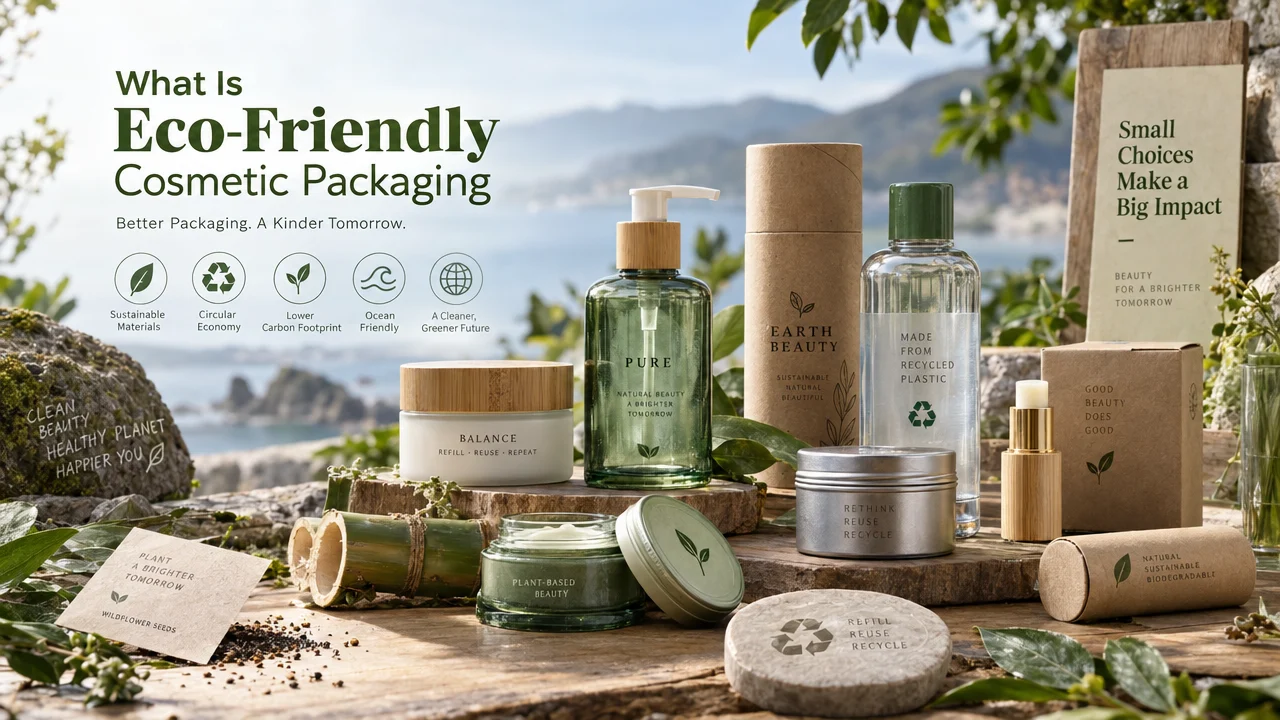
Eco-friendly cosmetic packaging is designed to reduce environmental impact while protecting the product and maintaining a good user experience. Common approaches include recyclable plastic, PCR materials, lightweight packaging, refillable systems, and packaging designs that use fewer materials. The best sustainable cosmetic packaging depends on the product formula, packaging structure, target market, manufacturing process, and end-of-life options.
Sustainable packaging is not defined by one material. Let’s look at the options brands can consider and how to choose the right solution.
What Makes Cosmetic Packaging Eco-Friendly?
When we talk about eco-friendly cosmetic packaging, it is easy to focus on the material alone.
But sustainability is more complicated than simply choosing plastic, glass, paper, or another material.
I recommend looking at the complete packaging lifecycle:
Material → Design → Production → Transportation → Use → End-of-life
Each stage can affect the overall environmental impact of packaging.
For example, a lightweight plastic bottle may use less material and require less energy to transport than a much heavier package. On the other hand, a package that uses multiple materials may be harder to recycle.
So, rather than asking, “Which material is the most eco-friendly?” brands should ask:
“Which packaging solution provides the best balance of sustainability, product protection, functionality, and market requirements?”
This approach is much more practical when developing a real cosmetic product.
What Are the Most Sustainable Cosmetic Packaging Materials?
There is no single material that is perfect for every cosmetic product.
The right choice depends on the formula, product positioning, manufacturing requirements, and recycling infrastructure in the target market.
Recyclable Plastic
Plastic remains one of the most widely used materials for cosmetic packaging.
Common applications include:
- Lotion bottles
- Serum bottles
- Cosmetic bottles
- Airless bottles
- Cream jars
High-quality plastic packaging can offer several practical benefits:
- Lightweight construction
- Durability
- Cost efficiency
- Flexible design
- Efficient transportation
For brands selling internationally, lightweight plastic packaging can also help reduce the weight and volume associated with transportation.
However, choosing recyclable plastic does not automatically mean the package will be recycled after use.
Actual recycling depends on factors such as:
- Local recycling infrastructure
- Packaging design
- Material composition
- Collection systems
- Consumer disposal behavior
For this reason, brands should evaluate the complete packaging system rather than relying on a material label alone.
PCR Plastic
PCR stands for Post-Consumer Recycled plastic.
PCR materials are produced using plastic that has already been used by consumers, collected, processed, and incorporated into new products.
For cosmetic brands, PCR can be an option for reducing reliance on virgin plastic.
It can be considered for products such as:
- Lotion bottles
- Skincare bottles
- Cream jars
- Other plastic cosmetic containers
One important distinction is worth remembering:
PCR describes the recycled content of a material, while recyclable describes what may happen to the packaging after it is discarded.
They are related, but they are not the same thing.
When considering PCR packaging, brands should discuss material availability, appearance, performance, and target-market requirements with their packaging supplier.
Glass Packaging
Glass is another established material for cosmetic packaging.
It is commonly used for:
- Premium serum bottles
- Facial oil bottles
- Luxury skincare
- Dropper bottles
Glass can provide a premium appearance and may fit particularly well with high-end product positioning.
However, glass is heavier than most plastic alternatives.
Brands should therefore consider:
- Transportation weight
- Shipping requirements
- Breakage risks
- Product positioning
- Recycling infrastructure
For some premium skincare products, the visual and functional advantages of glass may justify these considerations.
Alternative Sustainable Materials
The cosmetic packaging industry is also exploring other approaches, including:
- Bio-based materials
- Paper-based components
- Reduced-material structures
- New recyclable packaging formats
These options can be useful in specific applications, but brands should avoid choosing a material simply because it is marketed as “green.”
We should always ask:
Does it protect the formula? Can it be manufactured consistently? How will consumers dispose of it? Does the target market have the necessary recycling infrastructure?
A sustainable packaging decision should be based on evidence and product requirements rather than marketing language.
Is Refillable Cosmetic Packaging More Sustainable?
Refillable cosmetic packaging is another important approach for brands looking to reduce packaging waste.
A typical refillable system may use:
- A durable outer container
- A replaceable inner container
- Refill cartridges
- Reusable components
The basic idea is simple: instead of replacing the entire package every time, customers reuse part of the original container.
Potential benefits include:
- Longer package life
- Reduced packaging waste
- Opportunities for customer retention
- New refill-based product models
However, refillable packaging is not automatically more sustainable in every situation.
We also need to consider:
- How many times the package is reused
- The material used for refills
- Additional components
- Transportation
- Cleaning requirements
- Consumer behavior
For brands considering a refillable system, the entire system should be evaluated rather than focusing only on the outer container.
Why Is Lightweight Cosmetic Packaging More Sustainable?
Reducing unnecessary packaging weight is another practical sustainability strategy.
A lighter package may require less material and can also reduce the weight that needs to be transported.
This can be particularly useful for brands producing large quantities of cosmetic products.
Lightweight packaging can be developed for products such as:
- Lotion bottles
- Serum bottles
- Airless bottles
- Cream jars
However, there is an important balance.
Lightweight packaging should still provide sufficient strength, product protection, leakage resistance, and user functionality.
Reducing material too aggressively could create new problems.
For example, if a bottle becomes too thin and loses structural performance, higher product damage or rejection rates could offset the intended benefits.
This is why packaging design and manufacturing expertise matter.
Are Cosmetic Tubes Eco-Friendly?
Cosmetic tubes are widely used for:
- Sunscreens
- Cleansers
- Hand creams
- Face masks
Whether a tube is environmentally preferable depends on its material, structure, manufacturing process, and end-of-life options.
Brands can explore approaches such as:
Mono-Material Tubes
Using fewer material types can potentially make packaging easier to process through certain recycling systems.
Reduced Material Usage
Optimizing tube dimensions and wall thickness can help avoid unnecessary material consumption.
Recyclable Materials
Where suitable recycling infrastructure exists, recyclable materials may provide another option.
However, brands should always verify the actual recycling requirements in their target markets.
A packaging format that is recyclable in one market may not have the same end-of-life pathway elsewhere.
How Can Brands Make Plastic Cosmetic Packaging More Sustainable?
Plastic packaging does not have to be excluded from a sustainability strategy.
Instead, brands can look at how the packaging is designed and manufactured.
Here are several practical approaches.
Use Less Material
Structural optimization can help reduce unnecessary material while maintaining packaging performance.
Consider Recycled Content
PCR materials can be evaluated when appropriate for the product and market.
Design for Recyclability
Brands can consider:
- Material combinations
- Components
- Closures
- Decoration
- Ease of separation
The entire package should be evaluated rather than looking at the bottle alone.
Optimize Transportation
Lightweight and space-efficient packaging can help improve logistics efficiency.
This is particularly relevant for brands exporting products internationally.
How Do Packaging Regulations Affect Sustainable Cosmetic Packaging?
Sustainability requirements are becoming increasingly important for beauty brands operating internationally.
Packaging regulations can vary significantly between markets and may change over time.
One important concept brands may encounter is Extended Producer Responsibility (EPR).
EPR policies can place greater responsibility on producers for the packaging they introduce into the market, including aspects related to collection, recycling, or waste management.
For brands selling in the:
- United States
- Europe
- Australia
it is important to understand the packaging requirements that apply to each target market.
Check Current Packaging Regulations
We recommend that brands verify current requirements with qualified regulatory professionals or relevant local authorities before launching a new product.
For packaging manufacturers, understanding the market requirements also helps create more suitable packaging solutions during the development stage.
How Should You Choose Eco-Friendly Cosmetic Packaging for Your Brand?
If you are developing a sustainable skincare product, I recommend following a simple five-step process.
Step 1: Understand Your Product
Start with the formula.
Consider:
- Product viscosity
- Ingredient sensitivity
- Compatibility
- Dispensing requirements
- Expected shelf life
For example, a sensitive serum may require a different packaging solution from a body lotion.
Step 2: Define Your Sustainability Goal
“Sustainable packaging” can mean different things to different brands.
Your primary goal might be:
- Recyclability
- Recycled content
- Material reduction
- Reusability
- Refillable packaging
Defining the goal first makes it easier to compare packaging options.
Step 3: Consider Your Target Market
A packaging solution should work in the market where your product will be sold.
Consider:
- Local recycling systems
- Consumer expectations
- Packaging regulations
- Transportation requirements
This is especially important for international beauty brands.
Step 4: Evaluate Packaging Performance
Sustainability should never come at the expense of product protection.
Before moving into mass production, brands should evaluate:
- Formula compatibility
- Leakage resistance
- Structural strength
- Dispensing performance
- Appearance
- User experience
Sample testing is an important part of this process.
Step 5: Work With an Experienced Supplier
An experienced cosmetic packaging manufacturer can help brands compare different options based on:
- Product requirements
- Sustainability goals
- Manufacturing feasibility
- Budget
- Target market
This can save time and reduce the risk of selecting a package that looks good on paper but creates problems during production.
What Should You Look for in a Sustainable Cosmetic Packaging Supplier?
Choosing the right supplier is especially important when developing customized sustainable packaging.
I recommend looking at four areas.
Material Knowledge
The supplier should understand different packaging materials and options such as:
- Recycled plastics
- PCR materials
- Recyclable packaging
- Lightweight structures
- Alternative materials
They should also be able to explain the practical advantages and limitations of each option.
Customization Capability
A strong supplier should be able to support more than standard packaging.
Look for capabilities such as:
- OEM/ODM
- Custom bottle development
- Mold development
- Structural optimization
- Sample development
Custom development can help brands balance sustainability with functionality and design.
Manufacturing and Quality Control
Sustainable packaging still needs to perform consistently.
Brands should evaluate:
- Production capability
- Material control
- Quality inspection
- Functional testing
- Production consistency
A packaging concept only becomes valuable when it can be manufactured reliably at scale.
Global Export Experience
International brands need a supplier that understands global business requirements.
This includes experience with:
- International communication
- Production coordination
- Export procedures
- Packaging requirements
- Delivery management
This can be particularly valuable for beauty brands serving the USA, Europe, and Australia.
Why Choose Comaypack for Eco-Friendly Cosmetic Packaging?
At Comaypack, we understand that sustainable packaging is not simply about choosing one “green” material.
The right solution needs to balance:
- Product protection
- Packaging performance
- Brand positioning
- Manufacturing feasibility
- Sustainability goals
- Target-market requirements
We work with beauty brands to develop practical cosmetic packaging solutions based on their individual needs.
OEM and ODM Customization
Our OEM/ODM capabilities support brands from early-stage packaging development through production.
We can assist with:
- Custom bottle development
- Mold development
- Packaging structure customization
- Product customization
This allows brands to explore packaging solutions that fit their products instead of being limited to standard designs.
Plastic Cosmetic Packaging Expertise
Our product range includes:
- Lotion bottles
- Serum bottles
- Airless bottles
- Cream jars
- Other plastic cosmetic containers
Plastic packaging can be part of a more sustainable packaging strategy when brands carefully consider:
- Material consumption
- Recycled content
- Package weight
- Structure
- Recyclability
- Transportation
The goal is to develop a solution that works in the real world, not simply one that sounds sustainable.
Surface Treatment and Decoration
Sustainable packaging still needs to represent the brand visually.
Comaypack provides decoration options including:
- Spray coating
- Electroplating
- Silk printing
- Hot stamping
The appropriate decoration method can be evaluated according to the brand’s design requirements, packaging structure, and target-market considerations.
For brands pursuing a sustainability strategy, we recommend discussing the complete packaging design rather than evaluating decoration separately.
Global Export Experience
Comaypack works with customers in international markets, including:
- USA
- Europe
- Australia
Our experience with global customers helps us understand the importance of:
- Clear communication
- Stable quality
- Production coordination
- Reliable delivery
- Complete packaging solutions
For a growing beauty brand, having one experienced packaging partner can make the product development process much easier.
Eco-Friendly Cosmetic Packaging FAQs
What is the most eco-friendly cosmetic packaging?
There is no single packaging material that is universally the most eco-friendly. Brands should evaluate material use, recyclability, recycled content, product protection, transportation, and end-of-life options based on their specific product and market.
Is plastic cosmetic packaging recyclable?
Some plastic cosmetic packaging can be recyclable, but actual recycling depends on the material, package design, local collection systems, and recycling infrastructure. Brands should verify these factors in their target markets.
What is PCR plastic in cosmetic packaging?
PCR stands for Post-Consumer Recycled plastic. It is made using plastic that has already been used by consumers and recovered for use in new products. PCR can help brands incorporate recycled content into cosmetic packaging.
Is refillable packaging better for the environment?
Refillable packaging can reduce packaging waste when customers reuse the main container multiple times. However, its overall environmental performance depends on the refill system, materials, transportation, number of uses, and consumer behavior.
Is glass more sustainable than plastic for cosmetics?
Not necessarily. Glass has advantages such as durability and established recycling systems in many markets, but it is also heavier than plastic. The better option depends on the product, transportation requirements, packaging design, and local end-of-life systems.
How can cosmetic brands reduce packaging waste?
Brands can explore several approaches, including lightweight designs, recycled materials, recyclable structures, refillable systems, and reduced packaging components. The best strategy depends on the product and target market.
Conclusion
Eco-friendly cosmetic packaging is about more than choosing a sustainable material. Brands should consider recyclability, recycled content, material reduction, product protection, transportation, and end-of-life options. By working with an experienced packaging manufacturer, brands can develop practical solutions that support both sustainability goals and commercial needs.
For us, sustainable packaging starts with understanding the complete product and supply chain.
A lightweight plastic bottle may be the right solution for one skincare product. A refillable system or glass bottle may make more sense for another.
The most effective approach is to evaluate each project individually and develop packaging around the product, brand, market, and long-term business goals.
For brands looking for a customized cosmetic packaging solution, Comaypack can support OEM/ODM development, mold development, surface treatment, manufacturing, and global delivery.