
Introduction
In cosmetic packaging development, selecting the right bottle material is no longer just a manufacturing decision. Packaging materials now directly influence brand positioning, consumer perception, transportation efficiency, sustainability performance, and even product stability.
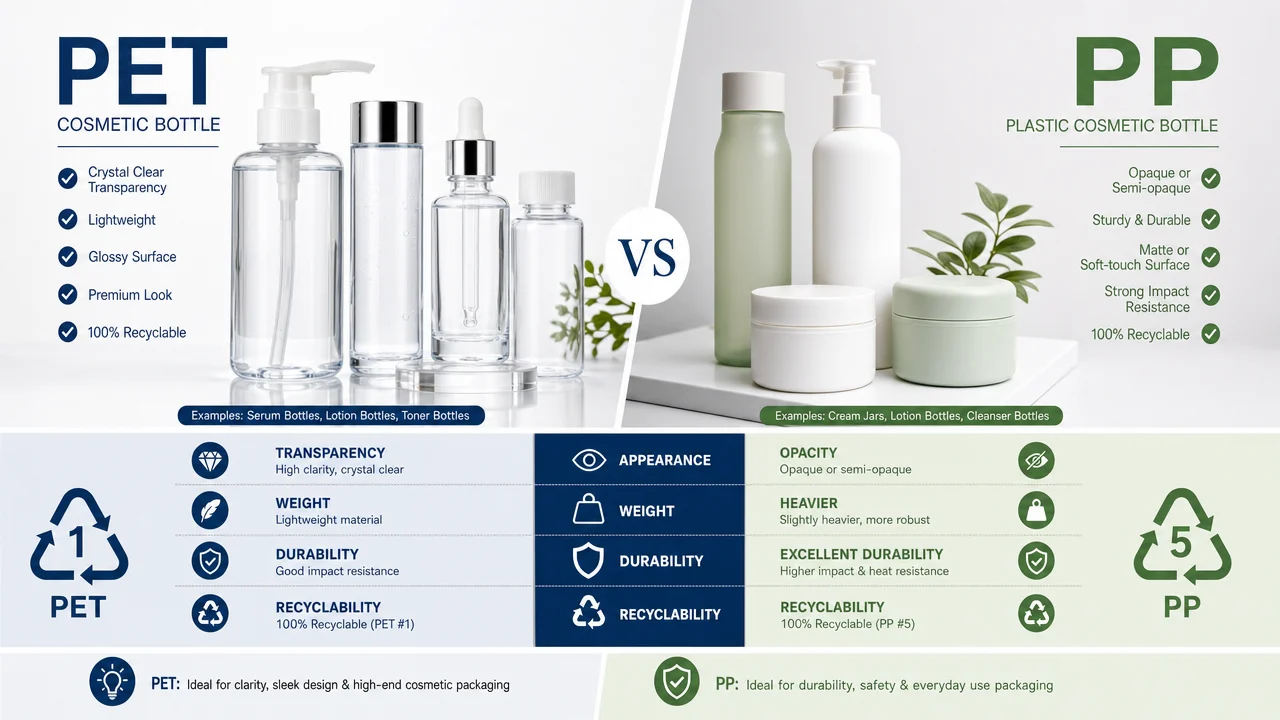
Among plastic materials used in cosmetic packaging, PET and PP remain two of the most widely adopted options. Both materials are highly versatile and cost-effective, yet they serve very different purposes in modern beauty packaging systems.
PET is known for its transparency and premium retail appearance, while PP is valued for its chemical resistance, flexibility, and functional durability. For cosmetic product managers, packaging designers, and procurement teams, understanding where each material performs best is essential for building an effective packaging strategy.
The question is not simply whether PET or PP is “better.” The real challenge is determining which material better aligns with a product’s formulation, market positioning, distribution model, and sustainability goals.
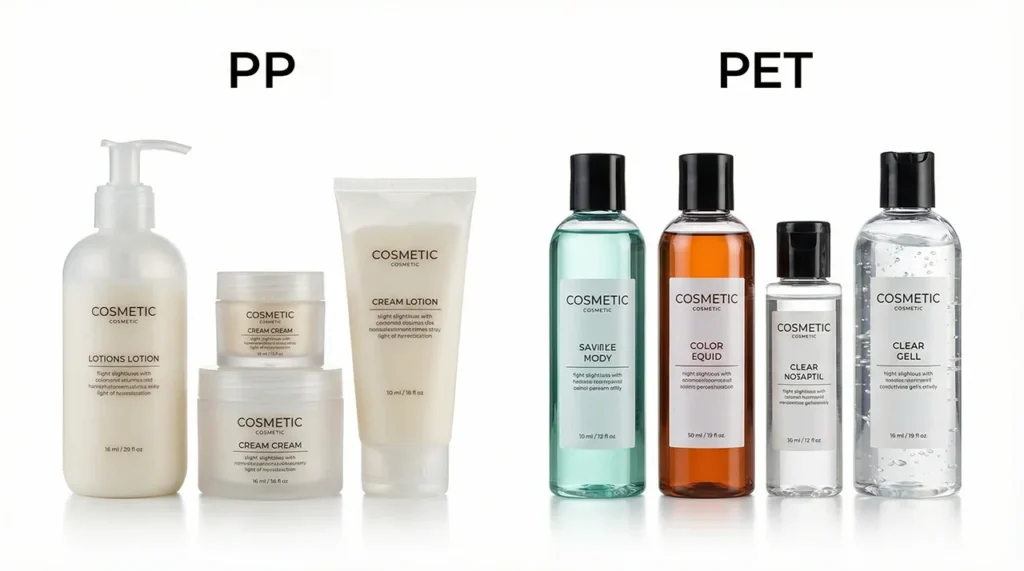
PET is widely used for transparent, lightweight cosmetic bottles that prioritize shelf appeal and recyclability. PP offers superior heat resistance, chemical stability, and structural flexibility, making it ideal for cream jars, pumps, caps, and functional skincare packaging. PET is often preferred for retail-focused liquid products, while PP performs better in chemically demanding or high-durability applications. The best choice depends on product type, branding strategy, and operational requirements.
Understanding PET and PP in Cosmetic Packaging
PET (Polyethylene Terephthalate) has become one of the dominant materials in cosmetic bottle manufacturing because of its excellent clarity, rigidity, and lightweight structure. Consumers often associate transparent PET bottles with cleanliness and freshness, which is why PET is frequently used in:
- toners
- shampoos
- cleansers
- body lotions
- micellar water packaging
Its strong visual appeal makes it particularly valuable in retail environments where consumers want to see the product itself.
PP (Polypropylene), on the other hand, is fundamentally different in both appearance and performance. Unlike PET, PP is naturally more opaque and flexible. While it may not offer the same premium transparency, it provides exceptional chemical resistance and heat tolerance.
As a result, PP is commonly used for:
- cream jars
- pump components
- airless bottles
- caps and closures
- treatment packaging
In many cases, cosmetic packaging systems actually combine both materials. A skincare product may use a PET outer bottle for visual appeal while incorporating PP pumps or closures for functional performance.
PET vs PP: Technical and Commercial Comparison
Before evaluating applications, it is important to compare the two materials across engineering and commercial dimensions.
📊 PET vs PP Cosmetic Packaging Comparison Table
| Dimension | PET | PP |
| Transparency | Excellent | Low to moderate |
| Appearance | Glossy, premium | Functional, matte |
| Rigidity | High | Moderate |
| Flexibility | Lower | Higher |
| Heat Resistance | Moderate | Excellent |
| Chemical Resistance | Good | Excellent |
| Impact Resistance | Good | Very good |
| Weight | Lightweight | Lightweight |
| Recyclability | Widely recyclable (#1) | Recyclable (#5) |
| Decoration Compatibility | Excellent | Good |
| Cost | Slightly higher | Lower |
| Typical Applications | Toners, cleansers, shampoos | Cream jars, pumps, closures |
This comparison highlights an important industry reality: PET and PP are not direct replacements for one another. Instead, they solve different packaging challenges.
Why PET Dominates Transparent Cosmetic Bottle Packaging
One of PET’s greatest strengths is visual presentation.
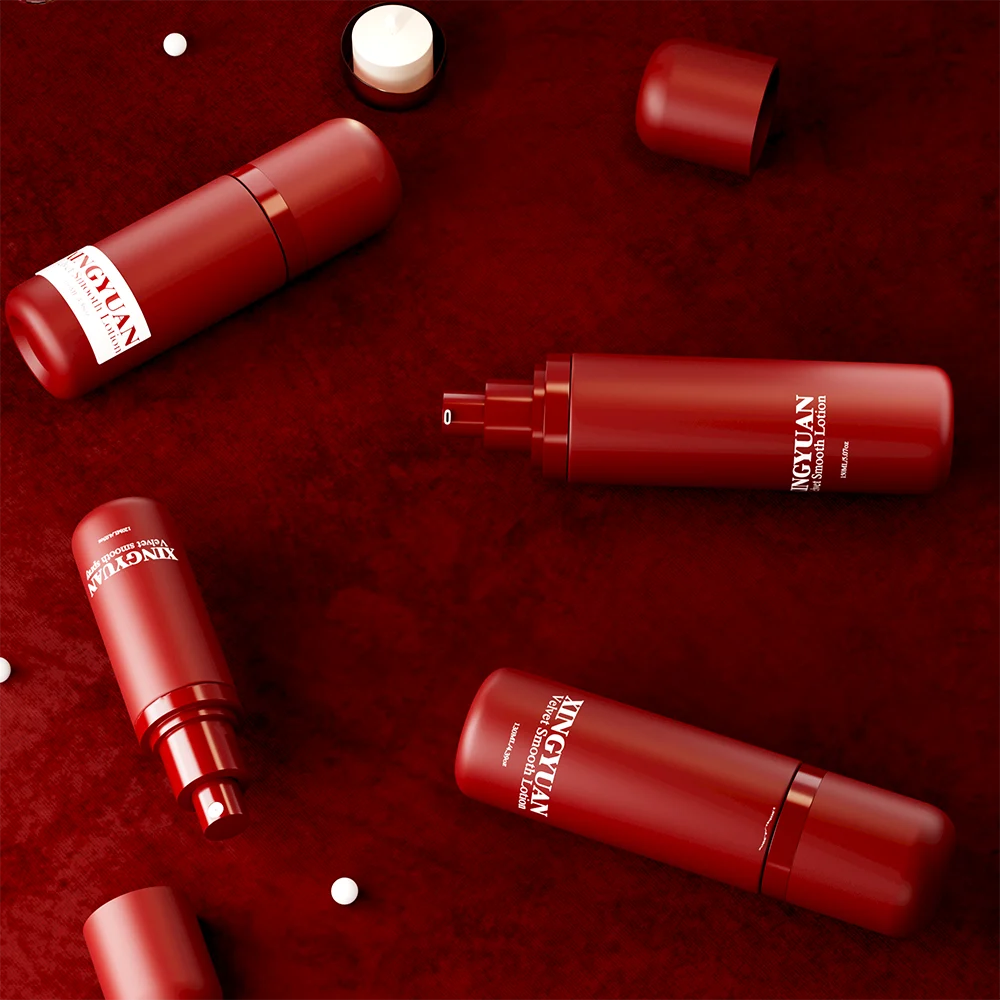
Modern skincare brands increasingly rely on packaging transparency to reinforce concepts such as:
- purity
- cleanliness
- ingredient visibility
- minimalism
This is especially common in:
- Korean skincare
- clean beauty brands
- dermatologist-led skincare
- pharmacy skincare products
For example, brands such as The Ordinary and CeraVe use transparent or semi-transparent bottle systems to emphasize scientific simplicity and functional credibility.
PET supports this positioning exceptionally well because it combines:
- glass-like clarity
- lightweight transportation
- relatively low production cost
Compared with glass, PET dramatically reduces shipping weight and breakage risk, making it ideal for e-commerce distribution.
This operational advantage has become increasingly important as beauty brands expand globally through online sales channels.
PET also performs extremely well in high-volume manufacturing environments. Global cosmetic brands favor PET because:
- supply chains are mature
- tooling is standardized
- production speed is high
- recycled PET availability continues to improve
For procurement teams managing large-scale production, PET remains one of the safest and most commercially efficient packaging materials available.
👉 Internal link suggestion:
Anchor text: PET cosmetic bottles → PET product page
Why PP Is Preferred for Functional Cosmetic Packaging
While PET dominates transparent packaging, PP has become essential in functional packaging systems.
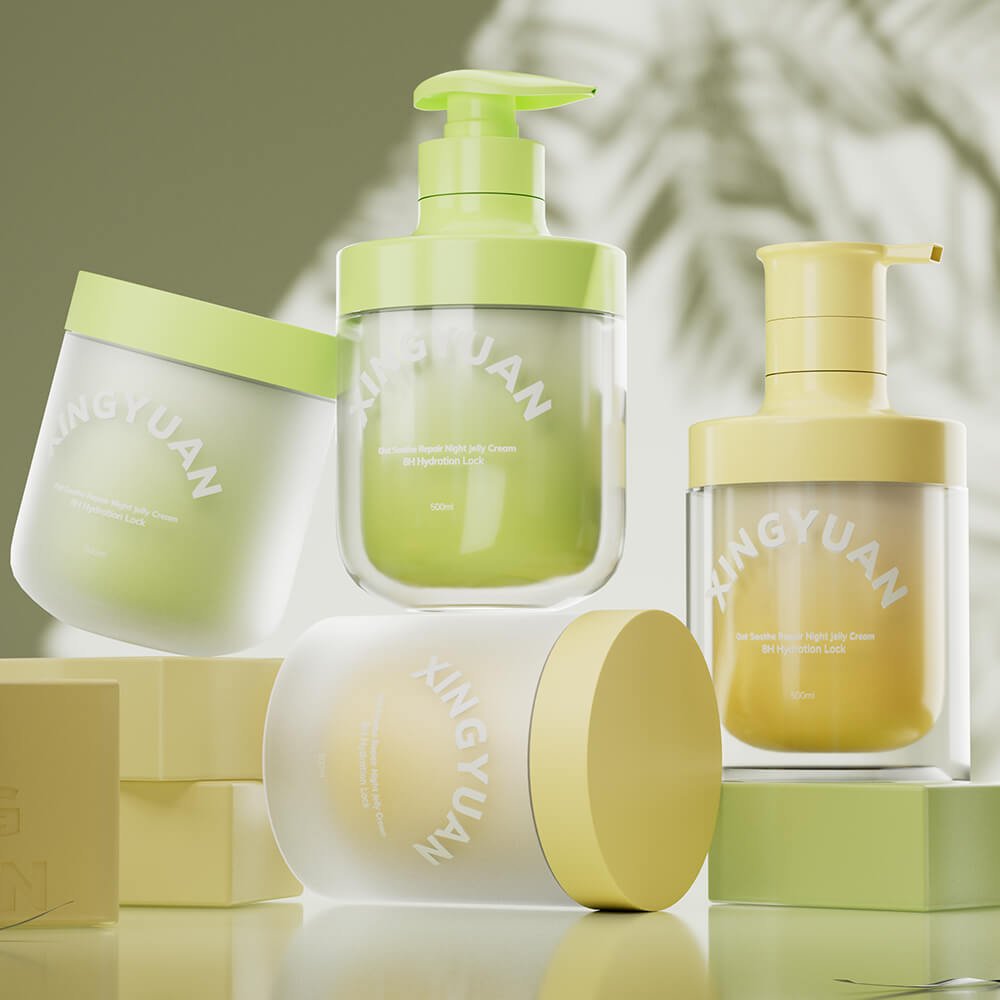
PP’s biggest advantage is chemical and thermal stability. It performs extremely well in products exposed to:
- essential oils
- active ingredients
- thicker formulations
- elevated temperatures
This is why PP is widely used in:
- cream jars
- balm containers
- treatment packaging
- airless systems
- dispensing pumps
For example, many premium skincare brands use PP airless pump systems because PP can withstand repeated mechanical movement while maintaining structural integrity.
PP also allows for greater flexibility in packaging engineering. It is less brittle than PET, which reduces stress cracking and improves durability in components such as:
- flip-top caps
- dispensing closures
- refill systems
In practical terms, PP is often the “working material” behind many cosmetic packaging systems. Consumers may notice the PET bottle visually, but the PP components are frequently what ensure the package functions properly over time.
Product Positioning: Retail Aesthetics vs Functional Reliability
The choice between PET and PP often reflects a broader branding strategy.
PET is strongly associated with:
- modern retail presentation
- transparency
- visual freshness
- lightweight luxury
This makes it highly effective for products sold in:
- beauty retail chains
- e-commerce platforms
- social-media-driven skincare markets
PP, meanwhile, is associated more with:
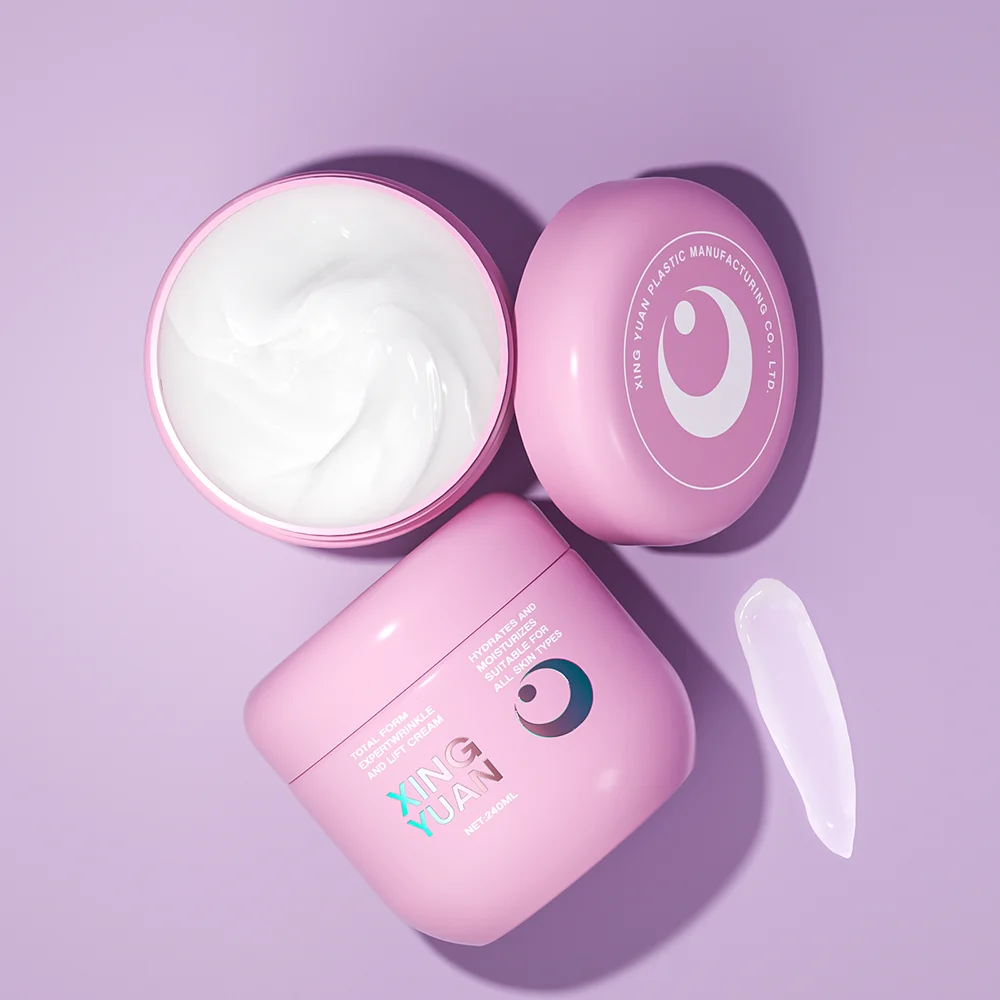
- functionality
- durability
- clinical packaging
- practical dispensing systems
As a result, PP is frequently used in:
- pharmaceutical skincare
- dermocosmetics
- treatment-focused packaging
The difference is subtle but important.
Consumers tend to evaluate PET packaging visually, while they evaluate PP packaging through tactile and functional experience.
Leading brands understand this distinction and often combine both materials strategically rather than relying exclusively on one.
Sustainability and Environmental Considerations
Sustainability discussions in cosmetic packaging have become far more nuanced in recent years.
PET currently benefits from one of the strongest recycling infrastructures globally. It is widely collected and reused in many countries, making it highly compatible with circular packaging initiatives.
This has accelerated the adoption of:
- PCR PET bottles
- lightweight PET packaging
- mono-material PET systems
Many multinational beauty companies now use recycled PET to meet ESG commitments and reduce virgin plastic consumption.
PP, however, offers sustainability advantages in different areas.
Because of its durability and chemical resistance, PP is highly suitable for:
- refillable packaging
- reusable components
- long-life dispensing systems
Additionally, mono-material PP packaging systems are becoming increasingly popular because they simplify recycling streams.
For example, some airless packaging manufacturers now develop fully PP-based packaging systems to improve recyclability by eliminating mixed-material structures.
This reflects a broader industry shift:
brands are moving from “single recyclable material” thinking toward “system-level sustainability.”👉 Internal link suggestion:
Anchor text: sustainable cosmetic packaging solutions → Sustainability page
Cost and Procurement Considerations
From a procurement perspective, PET and PP differ significantly in production economics.
PET generally costs slightly more than PP due to:
- higher transparency requirements
- processing conditions
- visual quality standards
However, PET often creates stronger shelf appeal, which can improve perceived product value.
PP, by contrast, is highly economical and performs exceptionally well in functional applications where appearance is secondary to durability.
PP also supports:
- faster injection molding cycles
- strong component durability
- stable long-term production consistency
This makes PP particularly attractive for:
- high-volume skincare lines
- pharmacy brands
- refill systems
- industrial-scale production
In many real-world projects, procurement teams select materials based not only on unit price, but also on:
- transportation efficiency
- damage reduction
- component lifespan
- assembly compatibility
How Cosmetic Brands Should Choose Between PET and PP
The most effective packaging strategies align material selection with product and brand objectives.
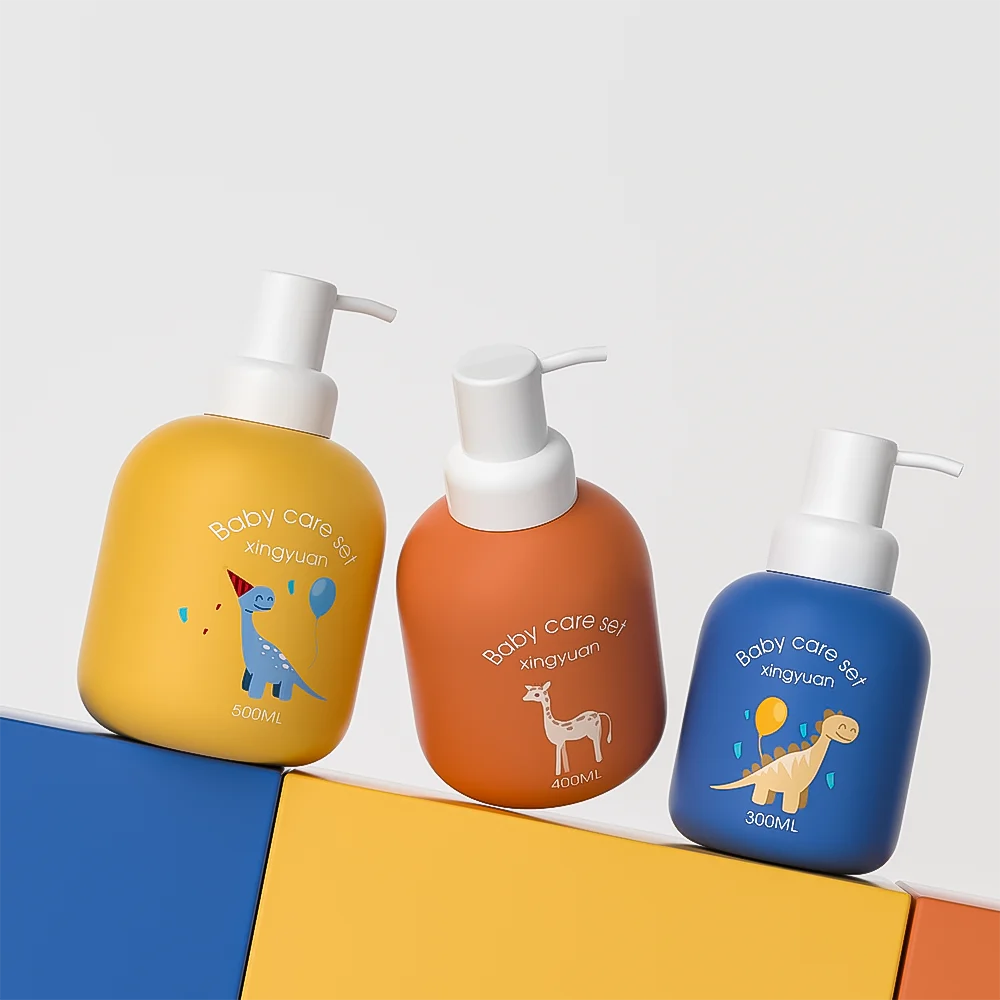
Choose PET If Your Brand Prioritizes:
- transparent packaging aesthetics
- strong retail shelf impact
- lightweight logistics
- recyclable bottle systems
- mass-market skincare positioning
PET works especially well for:
- toners
- cleansers
- shampoos
- liquid skincare
Choose PP If Your Brand Prioritizes:
- functional durability
- heat resistance
- chemical stability
- refillable systems
- treatment-oriented packaging
PP is particularly effective for:
- cream jars
- airless bottles
- dispensing systems
- active skincare products
Practical Packaging Strategy Recommendations
The most sophisticated cosmetic brands rarely rely on a single material across all product categories.
Instead, they build packaging systems strategically.
For example:
- PET bottles for visual appeal
- PP pumps and closures for functionality
- PP refill systems for sustainability
- PET outer packaging combined with PP dispensing structures
This hybrid approach allows brands to optimize:
- consumer perception
- logistics efficiency
- operational reliability
- sustainability performance
In modern cosmetic packaging development, material selection is no longer simply about cost reduction. It is about balancing engineering performance with brand storytelling and consumer experience. Need more details of cosmetic packaging material contact our packaging expert, you will get replay in 6 hours.
Conclusion
PET and PP each play essential roles in cosmetic packaging, but they are designed to solve different challenges.
PET excels in transparency, shelf appeal, and scalable retail packaging. PP performs better in functional, chemically demanding, and refill-oriented applications.
The most effective packaging strategies recognize that material selection should support not only product protection, but also brand identity, logistics efficiency, sustainability goals, and long-term commercial performance.
For cosmetic brands operating in increasingly competitive global markets, choosing the right packaging material is ultimately a strategic business decision—not just a technical one.