
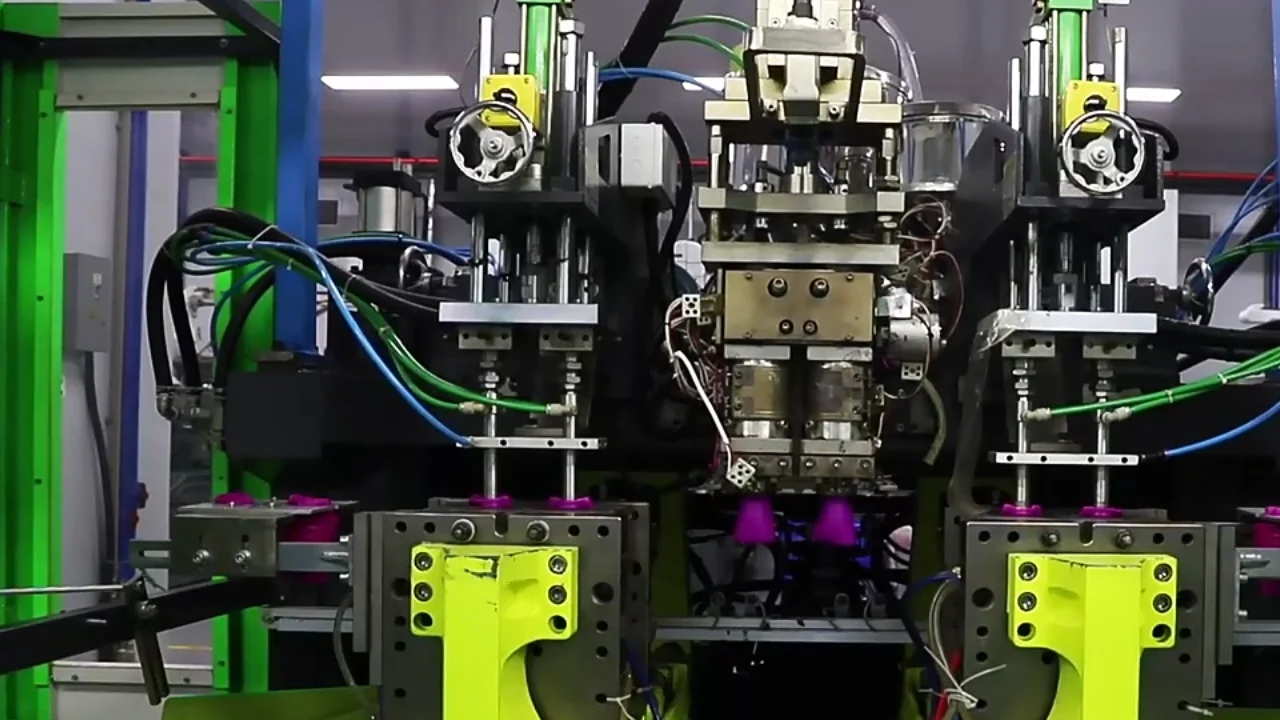
Every elegant cosmetic bottle begins with a tiny plastic pellet. Understanding how HDPE bottles are made helps brands choose safe, consistent, and sustainable packaging partners. From raw resin to finished, decorated containers, the HDPE bottle manufacturing process is a precise combination of material science, engineering, and cosmetic packaging design.
HDPE cosmetic bottles are made by melting high-density polyethylene resin and shaping it using blow molding. During this process, molten HDPE is extruded into a parison, inflated into a mold, cooled, trimmed, and decorated. Each production stage — from resin blending to final printing — ensures consistent wall thickness, product safety, and visual appeal. This efficient, high-speed process makes HDPE bottles ideal for cosmetic and personal care applications requiring durability, lightweight structure, and compatibility with skincare and haircare formulas.
Let’s take a behind-the-scenes look at the HDPE bottle production process, from resin preparation and molding to finishing — and discover how every cosmetic bottle takes shape.
What Is HDPE and Why Is It Used for Cosmetic Packaging?
HDPE (High-Density Polyethylene) is one of the world’s most reliable plastics for cosmetic bottles. Known for its toughness, chemical resistance, and recyclability, it’s widely used for lotions, shampoos, conditioners, and skincare products.
Key advantages of HDPE in cosmetic packaging:
- Non-reactive: Safe with active ingredients, acids, and alcohols.
- BPA-free and non-toxic: Compliant with FDA and EU standards.
- Lightweight yet strong: Reduces transport cost and breakage risk.
- Recyclable (♻️ #2 resin code): Compatible with closed-loop recycling systems.
- Flexible customization: Supports color, shape, and texture variations.
These properties make HDPE the ideal balance between aesthetic freedom and technical performance in cosmetic bottle manufacturing.
How Is HDPE Resin Prepared for Production?
The journey starts with raw HDPE resin pellets — small, translucent granules made from ethylene monomers through polymerization.
Step 1: Resin Selection
Comaypack uses only cosmetic-grade or food-contact-approved HDPE certified under FDA 21 CFR and EU 10/2011. This ensures zero contamination risk and consistent clarity and strength.
Step 2: Color and Additives
Before molding, resin pellets are blended with:
- Color masterbatch for Pantone-specific hues.
- UV stabilizers for light protection.
- Antistatic or gloss modifiers for better surface performance.
The blend is precisely measured to maintain uniformity across production.
Step 3: Drying and Conditioning
Although HDPE absorbs minimal moisture, pellets are often preheated or conditioned to achieve consistent melt flow and avoid air bubbles during extrusion.
What Are the Main Stages in HDPE Bottle Manufacturing?
The HDPE bottle manufacturing process involves six core steps:
- Feeding the resin into a hopper.
- Melting it under controlled heat (around 180–220°C).
- Extruding molten HDPE into a hollow tube (parison).
- Inflating the parison inside a mold cavity (blow molding).
- Cooling and solidifying the bottle shape.
- Trimming, inspecting, and decorating the finished bottles.
Each stage is carefully monitored for temperature, pressure, and material thickness to guarantee consistent results.
What Is Blow Molding and How Does It Work?
Blow molding is the core process used in cosmetic packaging production for HDPE bottles. It’s similar to glass blowing — only automated and much faster.
1. Extrusion Blow Molding (EBM)
This is the most common method for HDPE cosmetic bottles.
Process overview:
- Melted HDPE is extruded downward as a tube (parison).
- A two-part mold closes around it.
- Air is blown in through a needle or pin, inflating the plastic to fill the mold shape.
- The plastic cools and hardens quickly before the mold opens.
✅ Advantages:
- Ideal for medium-to-large bottles (50ml–1000ml).
- Works with multilayer or recycled HDPE materials.
- Low tooling cost and fast production cycles.
2. Injection Blow Molding (IBM)
Used for smaller, precision bottles (e.g., serums, essential oils).
Process overview:
- HDPE resin is injection-molded into a preform around a core rod.
- The preform is transferred to a blow mold and inflated.
- Results in excellent neck accuracy and surface finish.
✅ Advantages:
- Perfect for small-capacity cosmetic bottles requiring tight tolerances.
- Smooth interior surface ideal for sensitive formulations.
Both methods produce bottles that are lightweight, strong, and cost-efficient, depending on brand requirements.
How Are Cosmetic Bottle Shapes and Designs Formed?
Cosmetic packaging often demands unique, recognizable shapes. This is achieved through custom mold design — an essential part of the process.
- Mold Design:
- Comaypack’s engineers design 3D models that define wall thickness, curvature, and neck finish (e.g., 24/410, 28/410 standard sizes).Parison Control:
- Programmable extrusion controls adjust parison thickness at different points to ensure even distribution, especially in curved or asymmetrical shapes.Cooling Channels:
Built-in cooling ensures uniform shrinkage, preventing distortion and maintaining consistent dimensions.With precision tooling, brands can achieve bottles that balance aesthetic appeal and ergonomic comfort, suitable for high-end cosmetic collections.
What Happens After Molding? (Trimming, Cooling, Inspection)
Once the bottle exits the blow mold, several post-processing steps refine and prepare it for decoration:
- Trimming: Excess flash or plastic from the neck and base is removed using high-speed trimmers.
- Cooling: Bottles pass through conveyor cooling tunnels to stabilize shape.
- Leak Testing: Each bottle is air-pressure tested to ensure no pinholes or weak points.
- Visual Inspection: Optical sensors and trained QC staff check for defects, uneven coloring, or warping.
- Neck Finishing: The neck area is precision-cut for proper cap or pump fitting.
These stages guarantee that every HDPE bottle meets cosmetic-grade quality standards before decoration or filling.
How Are HDPE Bottles Decorated and Finished?
After molding and inspection, bottles enter the decoration and finishing phase — where branding and design take center stage.
Popular finishing techniques include:
- Silk-Screen Printing:
- Ideal for simple, elegant logos. Uses durable UV-cured inks.Hot Stamping:
- Adds metallic accents for luxury branding (gold, silver, or rose gold).Heat Transfer Printing:
- Transfers full-color artwork with strong adhesion.Shrink Sleeves or Labels:
- Offer 360° decoration with high-resolution graphics.Surface Treatments:
Matte, glossy, or frosted coatings elevate tactile feel.At this point, functional elements like pumps, sprayers, or caps are assembled. Finally, bottles are packed, batch-coded, and prepared for shipment.
What Quality Standards Apply to Cosmetic Bottle Manufacturing?
Producing cosmetic packaging demands strict compliance with international standards.
At Comaypack, every production stage follows:
- ISO 9001:2015 – Quality Management System.
- ISO 14001:2015 – Environmental Management.
- GMP (Good Manufacturing Practice) – Hygiene and traceability control.
- FDA / EU Regulation 10/2011 – Safety for materials in contact with cosmetics.
- REACH & RoHS Compliance – Restricting hazardous substances.
Each bottle batch undergoes:
- Dimensional accuracy checks (±0.2mm tolerance).
- Drop tests from 1.5 meters.
- Compatibility tests with standard cosmetic formulations.
These ensure that every HDPE bottle leaving the factory is safe, consistent, and brand-ready.
How Does Comaypack Ensure Precision and Consistency?
Comaypack’s modern production facility combines automation with craftsmanship.
- Our capabilities include:Fully automatic extrusion blow molding lines for HDPE bottles.
- In-house mold workshop for custom designs and rapid sampling.
- Pantone-matched resin coloring system ensuring brand consistency.
- Integrated QC stations for leak, pressure, and drop testing.
- On-site decoration lines for printing, labeling, and coating.
Through lean production and batch tracking, we maintain short lead times while guaranteeing stable quality — a standard appreciated by leading skincare and haircare brands.
Summary
The HDPE bottle manufacturing process combines material science and design precision — transforming simple resin pellets into durable, beautifully finished cosmetic packaging. With advanced blow molding technology and rigorous quality control, Comaypack delivers HDPE bottles that balance performance, style, and sustainability for cosmetic brands worldwide.