
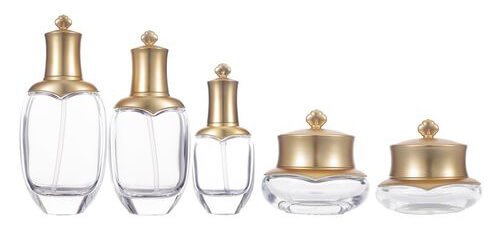
The debate between glass and PETG packaging is becoming increasingly significant in the cosmetic industry. While glass conveys luxury and purity, PETG offers durability and design flexibility. Choosing the right material affects not only brand image but also safety, cost, and sustainability — key factors for every cosmetic product manager and designer.
Glass and PETG each excel in different cosmetic packaging applications. Glass is premium, inert, and fully recyclable — ideal for high-end skincare and perfume products. PETG (Polyethylene Terephthalate Glycol) is lightweight, shatterproof, and more cost-effective, making it suitable for mass-market and travel-safe cosmetics. The better choice depends on brand positioning, formulation sensitivity, and sustainability goals.
Let’s break down their characteristics, advantages, and limitations to help you make an informed, data-driven packaging decision.
1. What Are Glass and PETG in Cosmetic Packaging?
Glass has long been the standard for luxury cosmetic packaging — used in perfume bottles, serums, and creams. It’s non-porous, non-reactive, and naturally UV-resistant. Because glass doesn’t interact chemically with formulations, it’s often preferred for active ingredient-heavy or fragrance-rich products.
PETG, short for Polyethylene Terephthalate Glycol-modified, is a copolyester engineered for clarity, impact resistance, and chemical stability. Unlike traditional PET, PETG adds glycol, which enhances flexibility and reduces brittleness. PETG’s appearance mimics glass — transparent and glossy — but it’s much lighter and safer to transport.
2. Key Differences Between Glass and PETG Bottles
| Property | Glass | PETG |
| Appearance | Glossy, high-end, natural transparency | Crystal-clear, glossy (close to glass) |
| Weight | Heavy | Light |
| Impact Resistance | Fragile, breakable | Shatterproof, durable |
| Chemical Resistance | Excellent | Very good (superior to PET) |
| Sustainability | Infinitely recyclable | Technically recyclable but limited infrastructure |
| Cost | Higher | Lower |
| Applications | Perfumes, serums, luxury creams | Lotions, cleansers, haircare, mass-market items |
This comparison shows that PETG offers practical advantages in durability and cost, while glass dominates in premium aesthetics and recyclability.
3. Which Offers Better Durability and Safety?
From a safety and handling standpoint, PETG clearly outperforms glass. It’s virtually unbreakable, making it ideal for products frequently used in bathrooms, travel kits, or spas. Glass, while durable under normal conditions, risks shattering during shipping — a serious concern for global distribution.
According to Rowell Packaging (2025), PETG bottles are shatterproof, significantly reducing breakage-related losses and shipping costs.
→ Real-world example: The Ordinary uses PETG for some toner bottles to enhance user safety and prevent leakage, whereas La Mer maintains glass jars for prestige appeal.
4. Which Provides Better Barrier Protection for Formulations?
Barrier protection determines how well packaging preserves product stability.
- Glass: Completely impermeable to oxygen, moisture, and volatile compounds. It’s ideal for formulations containing vitamin C, retinol, or essential oils, which degrade easily.
- PETG: Offers strong but not absolute barriers. It blocks moisture and most gases effectively but doesn’t match glass for volatile-sensitive formulas. However, it can be coated with UV inhibitors or metalized films for enhanced protection.
💡 Tip: For sensitive serums or actives, glass is still the safer long-term choice; for general lotions or cleansers, PETG provides adequate stability at lower cost.
5. Sustainability Comparison: Glass vs PETG
Sustainability is now a decisive factor in packaging selection.
- Glass Sustainability:
Glass is 100% recyclable without loss of quality. It’s made from abundant raw materials — sand, soda ash, and limestone — but requires high melting temperatures, increasing energy consumption and CO₂ emissions during production. Brands like L’Oréal and Lancôme are addressing this by using lightweight glass designs that reduce carbon footprint.
- PETG Sustainability:
PETG is technically recyclable, but it often falls under #7 (Other Plastics), which complicates recycling. Still, its low energy production requirements and lightweight shipping reduce transport emissions.
New PETG variants, such as Eastman’s Cristal One Renew, incorporate post-consumer recycled content, improving circularity for cosmetic packaging materials.
🔁 Verdict: Glass wins on long-term recyclability, while PETG performs better in life-cycle energy efficiency and shipping emissions.
6. Cost and Manufacturing Considerations
For procurement teams, cost-effectiveness and scalability are key.
- Glass:
- Mold costs are higher and production slower.
- Heavier freight costs increase overall logistics expenses.
- Limited flexibility in design changes once molds are produced.
- PETG:
- Injection stretch blow molding (ISBM) allows high-speed mass production.
- Lightweight bottles reduce freight costs by up to 60%.
- Supports various shapes and custom designs, making it ideal for small and mid-size brands testing new products.
💰 Example: An average 100 ml PETG bottle can cost 40–60% less to produce and ship than a comparable glass bottle — a key advantage for new market entrants.
7. Brand Examples: Who Uses Glass vs PETG Packaging?
Glass Packaging Examples:
- Estée Lauder Advanced Night Repair uses amber glass for formula protection and luxury appeal.
- Dior Prestige and Chanel Sublimage rely on heavy glass jars to communicate exclusivity and permanence.
- Lancôme Génifique uses frosted glass bottles with droppers, emphasizing clinical sophistication.
PETG Packaging Examples:
- The Ordinary and CeraVe use PETG and HDPE for lightweight, practical, and cost-effective solutions.
- Fenty Skin integrates PETG components for travel-safe and refillable products.
- K-beauty brands like Innisfree and Etude House favor PETG for vibrant, affordable packaging that supports fast product rotation.
8. How to Choose the Right Material for Your Product Line
When deciding between glass and PETG, consider the following checklist:
| Criteria | Choose Glass if… | Choose PETG if… |
| Product Sensitivity | Your formula contains reactive or volatile ingredients | Your formula is stable and water-based |
| Brand Positioning | You want a luxury or premium feel | You target mass-market or travel convenience |
| Distribution Scale | Products are sold in boutiques or controlled logistics | Global or e-commerce distribution with higher shipping exposure |
| Sustainability Goal | You prioritize infinite recyclability | You prioritize carbon reduction and energy efficiency |
| Budget Constraints | Cost is secondary to image | You need scalable, low-cost production |
🧴 Pro Insight: Many brands now combine both materials — using PETG for outer containers and glass for inner refills, balancing cost and sustainability.
Summary
Glass and PETG each bring distinct advantages to cosmetic packaging. Glass conveys prestige, stability, and full recyclability, while PETG delivers flexibility, safety, and cost efficiency. The right choice depends on product sensitivity, logistics strategy, and brand identity. In 2025’s competitive beauty market, many brands blend the two — harnessing PETG’s practicality and glass’s timeless elegance.